Plant of the Month, April 2006
Ever thought about Louseworts ? by Heather Smith
With that common name, maybe not, but I have, and frequently. In fact they are one of my favourite genera when I visit the mountains. Of course not all Pedicularis (to give them their proper name) are beautiful and garden-worthy, but some of them certainly are.
Pedicularis is a circumpolar genus of the snapdragon family (Scrophulariaceae) consisting of perhaps 500 hemiparasitic species and we have two species in the wild here but neither are particularly striking (P. sylvatica (meadow) and P. palustra (damp ground)). They got their common name from a belief that the plant in the meadows somehow gave cattle lice. Yes I know, the suffix “wort” means “cure” or “treatment” but farmers thought otherwise. They are probably quite rare because farmers have rooted them out, as they have Hemlock Water Dropwort. However, herbalists use them as tranquilizers, muscle relaxants, powerful aphrodisiacs, and sedatives “ an amazing plant altogether.
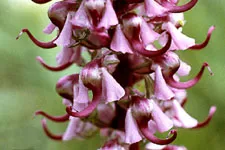
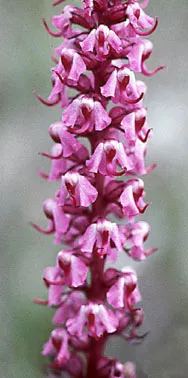
The first striking one that I remember seeing was in Switzerland and, like most people seeing one for the first time, I thought it was an orchid. Ralph Forbes told me that no, it was Pedicularis and thus began my continuing love for the genus. The species was P. verticillata. It has rich pink flowers and its leaves, scarlet to dark red when it is in open ground, are carried in whorls on the stem. At its best, it is very eye-catching and attractive and can frequently be seen beside streams
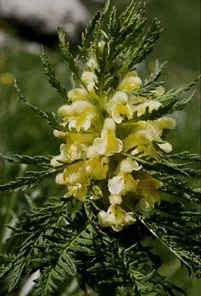
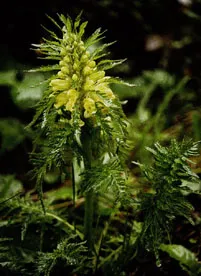
Another to be admired is P. foliosa (in the Carpathians a similar plant is P. hacquetica). This has creamy yellow flowers with bright green foliage and gets its name from the leaves that extend out from between the flowers. Both these species are mid-height.
One of the most lovely species is a North American one called P. groenlandica and known as “Elephants Heads” for an obvious reason. It is tall and also likes to grow in marshy ground or by water in California and the Rocky Mountains.
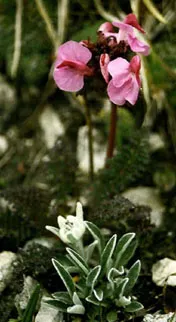
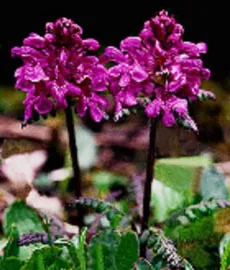
P. oedera is a circumpolar species (found all over the northern hemisphere). A small, upland meadow species, the best example of it I have seen was in the upland tundra of the Beartooth Plateau in Montana, in the Rocky Mountains and is the one pictured here. It is equally at home on a grassy slope on M’nlichen, above the Lauterbrunnan Valley in Switzerland or in the Tatra Mountains in Poland. It differs from other species in that all the flowers rise from the centre of the plant leading to it resembling a posy.